What Is the Meaning of Construction Inspection and Why Does It Matter?
A building can look structurally complete from every visible angle and still carry hidden defects that cost hundreds of thousands of Riyals to correct years later. This gap between what appears finished and what actually is finished is precisely why construction inspections exist.
Construction inspections are systematic, stage-by-stage evaluations carried out by qualified engineers to verify that a building is constructed in full conformance with approved drawings, material specifications, and applicable building codes. They are not a single visit at the end of a project. They are a structured oversight process that runs parallel to the construction timeline itself, from the moment the site is prepared to the day keys are handed over.
In Saudi Arabia, where both residential and commercial development move rapidly, the risks of skipping formal inspection at critical phases compound quickly. To manage these uncertainties effectively, a comprehensive risk assessment is essential to identify potential structural and financial vulnerabilities before they impact the project’s timeline. Defects in foundations, concealed MEP systems, or structural members become exponentially more expensive to correct once they are covered by finishes or loaded by the structure above. For anyone overseeing a construction project in Riyadh or Jeddah, understanding how construction inspections work is not optional knowledge. It is foundational due diligence.
This guide was prepared by Inspectex to walk developers, project owners, and asset managers through what construction inspections actually cover, how the procedure unfolds across project phases, and what a qualified inspector examines at each stage.
What Does a Construction and Building Inspector Actually Do?
Many project owners assume that site supervision by the contracting team is equivalent to independent inspection. It is not. A construction and site inspector operates with a different mandate entirely: to verify compliance on behalf of the building owner, not to manage the work itself. Understanding this distinction is the first step in using inspection effectively.
Reviewing Plans, Specifications, and Compliance Requirements
Before setting foot on the site, a qualified inspector begins with documents. This includes reviewing architectural and structural drawings, MEP schematics, soil reports, approved permits, and material submittals. The purpose is to establish the baseline against which every site observation will be measured. Without this documentary review, a site visit cannot produce a meaningful compliance assessment. It produces only a visual walkthrough, and a visual walkthrough misses most of what matters.
Conducting Stage-by-Stage Site Visits and Quality Assessments
Construction moves in phases, and each phase creates conditions that cannot be revisited once the next phase begins. A poured foundation cannot be re-examined after the ground floor slab is cast above it. Embedded conduits and pipes cannot be checked after walls are plastered. For this reason, construction inspections are structured around defined hold points, where the inspector must assess and document each phase before work proceeds to the next. Advanced equipment is used to detect conditions not visible to the naked eye, including moisture content in concrete, rebar placement accuracy, and hidden voids within structural elements.
Issuing Formal Reports and Flagging Non-Conformance Items
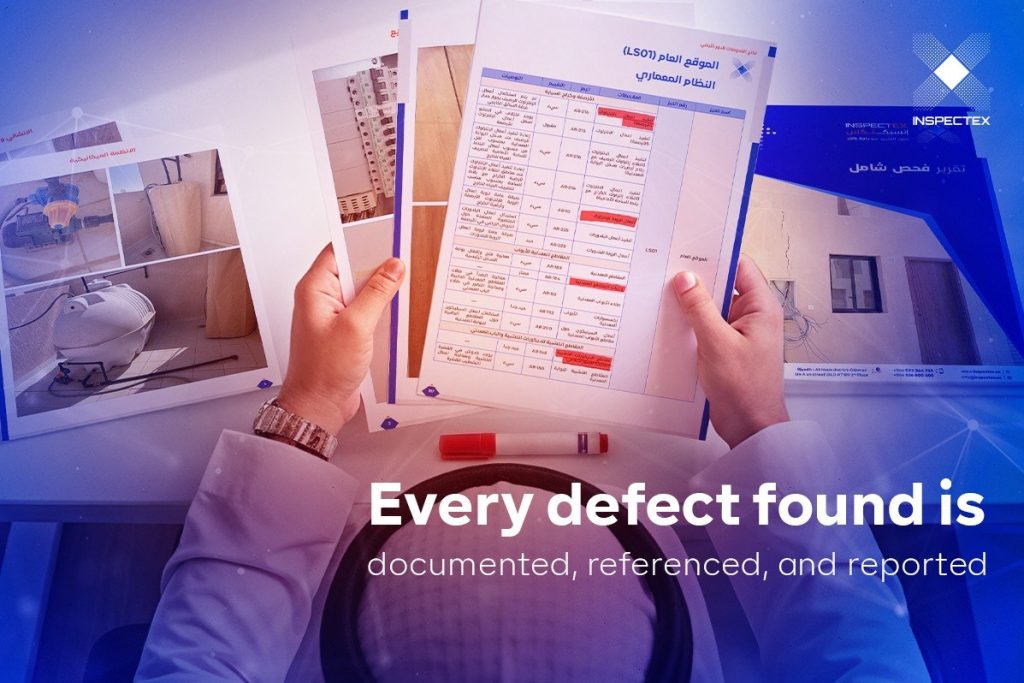
The output of every site visit is a formal inspection report. This document records observed conditions, photographs, measurements, comparison against design specifications, and any non-conformance items requiring correction. A properly structured report does not merely describe problems; it references the applicable standard being violated, specifies the location within the building, and provides a recommended corrective action. This creates an accountable paper trail that protects the project owner throughout construction and beyond.
The Construction Inspection Procedure: From Ground Break to Final Handover
Pre-Construction Inspection: Verifying Site Conditions and Permit Compliance
Before excavation begins, the site itself must be assessed. This includes verifying that the approved permits are in place, that site boundaries match the drawings, that existing soil conditions are consistent with the geotechnical report assumptions, and that site preparation meets the requirements for the foundation system to be used. Issues identified at this stage are the least costly to address, because nothing has yet been built.
Foundation and Structural Stage Inspection: The Most Critical Phase
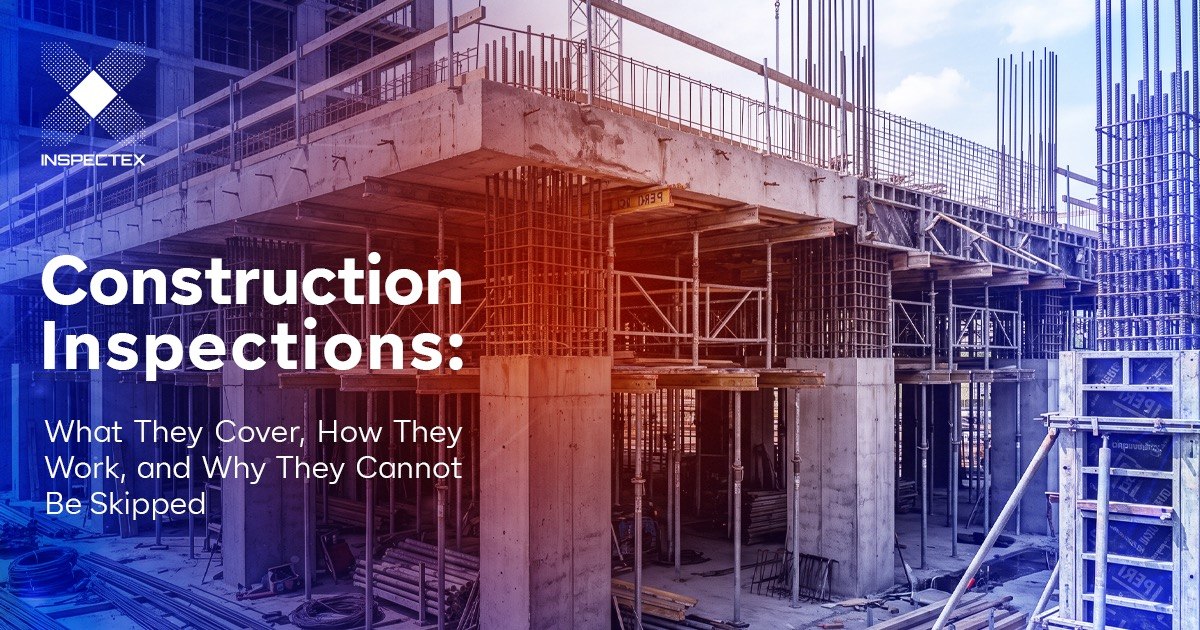
Foundation and structural work represent the phases where defects carry the most severe long-term consequences. Construction inspections at this stage verify rebar diameter, spacing, and cover depth against structural drawings; formwork dimensions and alignment; concrete mix design and pour conditions; curing procedures; and the geometry of structural elements, including columns, beams, and slabs. Any deviation at this stage that is not caught and corrected will be permanently incorporated into the building’s load-bearing system.
MEP Rough-In Inspection: Mechanical, Electrical, and Plumbing Before Concealment
Once structural work is completed, mechanical, electrical, and plumbing systems are installed before walls and ceilings are closed. This phase is a critical inspection window that closes permanently once the finishes go in. MEP rough-in inspections verify pipe routing, conduit placement, junction box locations, drainage slopes, insulation requirements, and pressure test results. Problems in concealed MEP systems are among the most expensive to correct after handover, which makes this phase one of the highest-value points in the entire inspection procedure.
Finishing and Pre-Handover Inspection: Quality Control at Completion
As the project approaches completion, a finishing inspection verifies that all visible and accessible elements meet specification: wall and floor surface tolerances, door and window alignment, waterproofing at wet areas, sanitary fixture installation, electrical panel labeling, fire detection device placement, and overall workmanship standards. This is also the stage where a pre-handover inspection compiles a punch list of all outstanding items before formal acceptance.
For residential projects, the home inspection process follows a similar logic, adapted for fully completed units where all systems must be assessed together.
What Does a Building Construction Inspector Examine?
The scope of a building construction inspector covers every system that makes a building safe, functional, and code-compliant. Breaking this down by category makes it easier to understand why inspection cannot be reduced to a single generalist visit.
Structural Integrity and Load-Bearing Element Verification
The structural frame is the element on which every other system depends. Inspectors verify that load-bearing elements, including columns, shear walls, beams, and slabs, are built to the dimensions and reinforcement specified in the structural drawings, and that connections between elements meet code requirements. Non-destructive testing techniques and advanced equipment are used to assess concrete quality and rebar placement without damaging completed work.
Material Quality and Workmanship Standards Assessment
Specified materials and delivered materials are not always the same. Inspectors verify that materials arriving on site match approved submittals in terms of grade and physical properties. Workmanship is assessed against accepted tolerances, since even compliant materials produce deficient results when applied incorrectly. This includes mortar joint consistency, tile adhesion, plaster thickness uniformity, and the quality of waterproofing membrane application at critical junctions.
Safety Systems, Fire Protection, and Code Compliance Checks
Safety systems are non-negotiable components of any occupied building. Construction inspections verify the installation of fire suppression systems, emergency egress routes, smoke detection coverage, electrical earthing systems, and structural provisions for loading conditions. All of this is evaluated against Saudi Building Code requirements, which define the minimum performance thresholds that every building in the Kingdom must meet.
Common Failures That Construction Inspections Catch Before They Become Costly
The most expensive defects are often invisible during construction but surface as major liabilities after completion. Systematic inspections identify these critical failures when remediation is still cost-effective:
- Insufficient Concrete Cover: Exposes reinforcement steel to moisture, leading to corrosion and concrete spalling that compromises structural integrity.
- Incorrect MEP Drainage Slopes: Causes water stagnation and waste accumulation, resulting in recurring blockages, foul odors, and dampness in floor structures.
- Defective Waterproofing: Leads to moisture intrusion and concrete cancer in slabs, while promoting mold growth that degrades indoor air quality.
- Electrical Conduit Deviations: Stresses wiring insulation, increasing the risk of short circuits and fire hazards while complicating future maintenance.
- Substandard Mortar and Tiling: Results in hollow, debonded tiles that crack or pop, necessitating total floor replacement rather than minor repairs. To see how these defects are systematically identified and managed during a professional property assessment, visit our detailed blog on Building Inspection.
Inspectex Construction Inspection Services
Project owners in Riyadh and Jeddah are working in one of the most active construction markets in the region, and the stakes for getting inspection right are correspondingly high. Inspectex was built specifically for this environment, with the technical depth and reporting standards that serious construction projects require.
Stage-by-Stage Construction Inspections Across Riyadh and Jeddah
Inspectex provides specialized construction inspections in Riyadh and Jeddah, following the project’s actual building sequence. Instead of a single final review, we implement hold points at every critical phase. This approach ensures continuous quality visibility for residential villas and commercial buildings throughout the construction duration.
Three-Engineer Specialized Teams: Civil, Electrical, and Mechanical
Every site visit is conducted by a team of three specialized engineers. A civil engineer evaluates structural and architectural integrity. An electrical engineer inspects power and low-current systems. A mechanical engineer reviews HVAC, plumbing, and fire protection.
SBC INSP 0009 Certified Reports
Inspectex reports comply strictly with SBC INSP 0009 (Saudi Building Code) standards. Each report includes photographic documentation, specific code references, prioritized corrective actions, and estimated remediation costs. We archive all technical data for a minimum of ten years, providing owners with a permanent technical record of the property’s construction history.
Frequently Asked Questions About Construction Inspections
What Is the Meaning of Construction Inspection?
Construction inspections are independent, engineer-led evaluations at specific project stages. They verify that materials and building methods comply with approved designs and Saudi Building Code (SBC) requirements.
What Is the Construction Inspection Procedure?
The procedure aligns with the building sequence, starting with document and permit reviews. Specialized engineers then inspect structural elements (foundations, columns, slabs) and MEP systems before they are concealed or loaded. The process concludes with a pre-handover assessment of workmanship.
Starting a Construction Project in Saudi Arabia? Get Inspectex on Site from Day One
Undetected construction defects lead to high remediation costs. Structured inspections protect investments by verifying quality during every building phase. Inspectex operates in Riyadh and Jeddah with specialized engineering teams and reporting aligned with the Saudi Building Code. We adapt our methodology to your project from excavation through final handover. Contact Inspectex early to maximize correction options and ensure full project compliance.

Leave a Reply