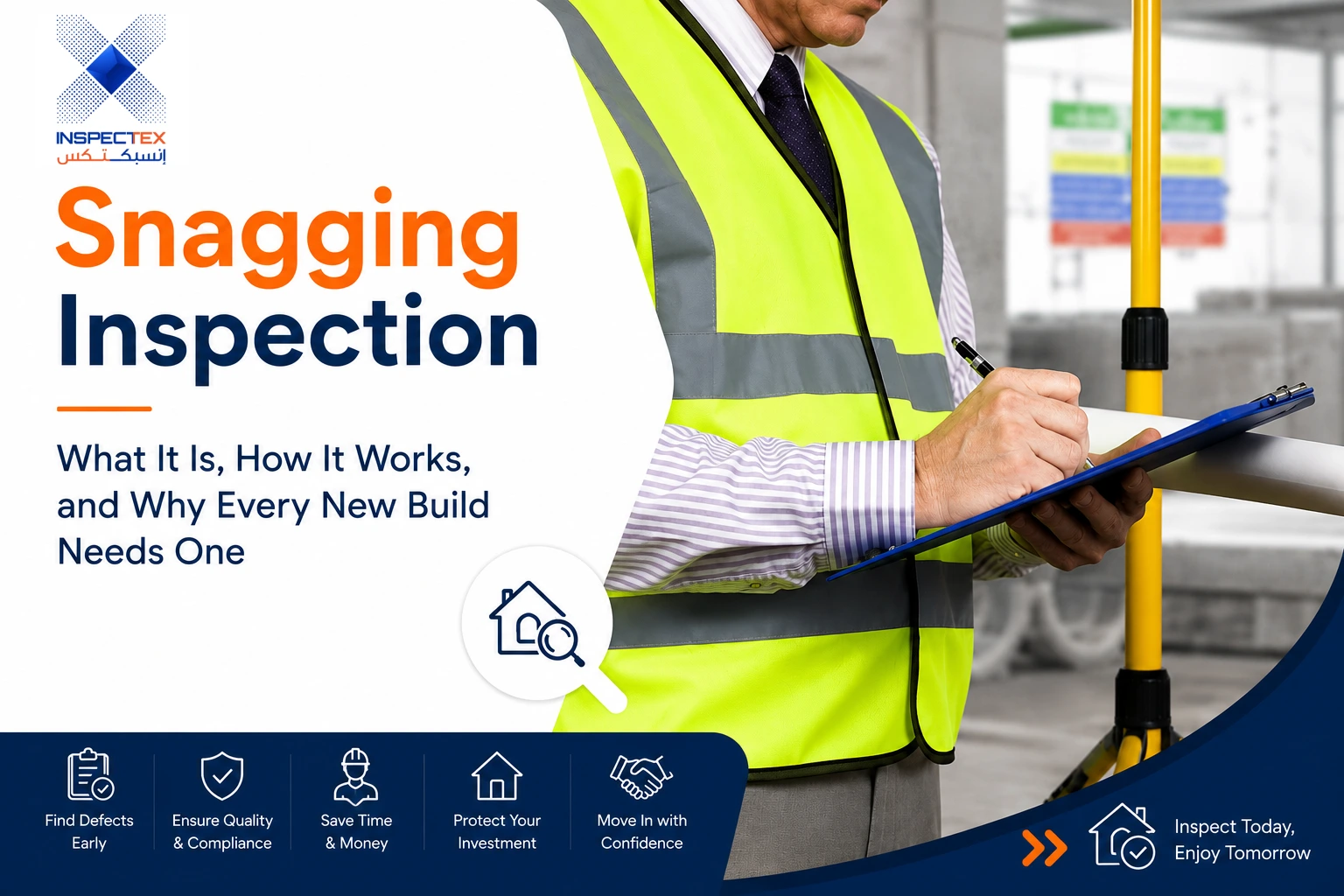
Receiving the keys to a newly constructed property is the culmination of a massive financial and emotional investment. The freshly painted walls and polished marble floors create a compelling illusion of perfection. However, behind the aesthetic appeal of a newly handed-over unit lies a complex web of structural, electrical, and mechanical systems that may harbor rushed workmanship or hidden defects.
Accepting a property based on a superficial walk-through is a risk no modern investor should take. The moment you sign the final handover documents, the financial burden of repairing concealed defects shifts entirely onto your shoulders. To prevent this, implementing a rigorous engineering evaluation before the final signature has become an essential step in modern real estate acquisition.
To help you navigate this critical phase, Inspectex provides this comprehensive guide to break down the importance of evaluating new properties, detailing the exact methodologies required to ensure your asset is technically sound, legally compliant, and genuinely ready for occupancy.
What Is a Snagging Inspection?
Evaluating a newly completed project requires a meticulous approach that strips away the cosmetic layer to assess the raw engineering execution.
Definition, Purpose, and When It Takes Place in the Construction Timeline
A Snagging Inspection is a highly specialized, non-destructive visual and technical audit conducted on a newly built property just before the final handover. The primary objective is to identify and document all minor and major defects – commonly referred to as “snags” – caused by poor workmanship, rushed timelines, or substandard materials. This evaluation typically occurs during the short window when the developer declares the property practically complete, but before the buyer makes the final payment and accepts the keys.
Understanding the Difference Between a Snagging and a Standard Building Audit
While both evaluations aim to protect the buyer, their contexts differ significantly. A standard property condition assessment is generally performed on older, previously occupied homes to identify long-term wear and tear, foundational settling, or aging MEP systems. Conversely, a snagging audit focuses exclusively on brand-new properties. It is designed to hold the original contractor accountable, verifying that the delivered unit matches the exact contractual specifications and complies with current building regulations without any newly introduced installation errors.
What Is a Snag and What Types of Snags Are Found in New Builds?
In construction terminology, a “snag” represents any defect or incomplete piece of work that remains after the contractor has officially finished the project. These issues range across a broad spectrum of severity. Cosmetic snags include scratched window panes, poorly applied paint, or uneven silicone sealant around bathroom fixtures.
While these are visually irritating, they are relatively cheap to fix. On the other end of the spectrum lie functional and structural snags. These include incorrectly wired electrical sockets, reversed hot and cold water plumbing lines, missing fire barriers, or hollow floor tiles that lack proper adhesive coverage. These functional defects pose immediate safety hazards and require significant financial resources to rectify if left undiscovered.
What Does a Comprehensive Evaluation Checklist Cover?
A professional evaluation leaves no stone unturned. It systematically dissects the property across multiple engineering disciplines to ensure absolute stability.
Structural Frame, Walls, Ceilings, and Floor Finishes
Civil engineers scrutinize the foundational integrity and the quality of surface finishes. Using laser levels and acoustic tapping tools, they check for unlevel floors, hollow-sounding tiles, and microscopic cracks in the plaster that indicate excessive structural settling. They also verify the alignment of partition walls and the seamless integration of ceiling panels.
Doors, Windows, Joinery, and Cabinetry Fit and Alignment
The operational flow of moving parts is tested rigorously. Evaluators ensure that all doors and windows open and close without friction, latch securely, and possess the correct weather-stripping to prevent thermal leakage. Kitchen and bathroom cabinetry are inspected for aligned hinges, smooth drawer mechanisms, and unblemished surface veneers.
Plumbing Fixtures, Drainage, and Wet Area Sealing
Water damage is a silent destroyer. The mechanical evaluation focuses on identifying leaks beneath sinks, verifying adequate water pressure in all fixtures, and ensuring that the gradient slopes in showers and balconies correctly direct water toward the drainage outlets without creating stagnant pools.
Electrical Installations, Switches, Sockets, and Safety Devices
Electrical systems are tested under load to ensure occupant safety. Engineers verify the correct polarity of all sockets, test the responsiveness of residual-current circuit breakers (RCCB), and check the main distribution boards for any loose connections that could spark a potential electrical fire or thermal hazard.
External Works: Roof, Cladding, Drainage, and Site Finishes
The external envelope of the building serves as the first line of defense against the climate. The audit covers the installation quality of external cladding, the integrity of the roof’s waterproofing membranes, and the efficiency of the external gutter systems to guarantee the property is fully weatherproofed.
The Evaluation Process Step by Step
Securing your real estate investment requires a strategic and timely approach to identifying and reporting these construction flaws.
Submitting the Report to the Developer and Tracking Rectification to Completion
Once the on-site evaluation concludes, the findings are compiled into a highly detailed snagging list. This formal document acts as an irrefutable engineering ledger. The buyer submits this list to the developer, legally halting the final handover process until every noted defect is rectified. After the developer confirms that the repairs are completed, a secondary re-inspection is often conducted to verify the repairs. Only when the property is proven to be completely defect-free should the buyer proceed with the final sign-off.
Why New Properties Still Need Independent Verification
A common misconception among buyers is that brand-new buildings are inherently flawless. However, modern construction relies heavily on fragmented supply chains and multiple tiers of subcontractors. The immense pressure to meet delivery deadlines often leads to rushed installations and inadequate internal quality control.
Conducting a thorough new build snagging provides an objective, unbiased review of the property. Developers’ internal teams might unintentionally overlook subtle flaws due to tight delivery schedules, making an independent third-party evaluation the only way to guarantee that the final product truly reflects the massive capital you have invested.
Evaluating the Financial Viability of the Audit
When analyzing the snagging inspection cost, buyers must weigh the upfront fee against the potential financial liabilities of inheriting a flawed building. The fee for an independent engineering audit is typically a microscopic fraction of the property’s total purchase price.
In contrast, discovering a concealed plumbing leak or a major electrical fault months after moving in can result in devastating repair bills, ruined furniture, and immense personal stress. Paying the snagging inspection cost is a highly calculated risk management strategy that provides absolute peace of mind and ensures the developer completes the necessary repairs under the warranty before handover.
Safeguarding Your Investment: The Inspectex Approach in Riyadh and Jeddah
Entering a real estate transaction blindly exposes you to unacceptable risks. At Inspectex, we provide the ultimate technical leverage required to protect your capital and secure a flawless asset.
Synchronized Diagnostics: Moving Beyond the Single-Inspector Limitation
Currently focusing our specialized operations in Riyadh and Jeddah, we categorically reject the flawed practice of assigning a single individual to evaluate a complex modern building. Our operational protocol demands the simultaneous deployment of three specialized engineers to every site. During a snagging inspection, the civil engineer scrutinizes the structural envelope and architectural finishes.
At the same time, the electrical engineer conducts heavy-load testing on the distribution panels, while the mechanical engineer evaluates the HVAC airflow and plumbing pressure. This concurrent, multi-disciplinary strategy ensures that every system is rigorously assessed with absolute professional precision, whether we are conducting a massive commercial property inspection or a detailed villa home inspection.
Non-Destructive Technologies: Uncovering Concealed Technical Flaws
To guarantee undeniable accuracy, our engineering teams integrate advanced non-destructive inspection technologies directly into their field routines. We do not rely on mere visual assumptions. Our experts utilize Thermal Imaging cameras to expose hidden moisture behind freshly painted walls and detect overheating circuits. Additionally, 3D Laser Scanning (LiDAR) captures exact spatial dimensions to reveal minute structural misalignments, while Ground Penetrating Radar (GPR) ensures subsurface integrity. These sophisticated tools empower our engineers to uncover hidden technical issues without causing a single scratch to your new property.
Certified Analytical Output: Engineering Data That Empowers Buyers
The field assessment is merely the data-gathering phase. Upon leaving the site, the raw metrics are transferred to our dedicated back-office unit, consisting of 7 specialized analytical engineers. This team rigorously processes the data to formulate a comprehensive document within 3 to 7 working days. The final deliverable cross-references the property’s condition against the strict mandates of the Saudi Building Code (SBC).
This detailed inspection report provides an actual Bill of Quantities (BOQ) with precise repair cost estimations based on current market rates. The document carries immense regulatory weight, backed by Inspectex’s official licensing from the Saudi Standards, Metrology and Quality Organization (SASO) and accreditation from the Saudi Accreditation Center (SAAC).
Frequently Asked Questions
What Is a Snagging Inspection?
It is a specialized, independent engineering audit conducted on a newly constructed property before final handover to identify defects, incomplete work, and deviations from building codes.
What Is the Snagging Process?
The process involves a comprehensive on-site evaluation by specialized engineers, followed by the generation of a detailed report outlining defects. This report is submitted to the developer, ensuring that the issues are rectified before the buyer accepts the property.
When Is the Best Time to Book a Home Snagging Evaluation?
The optimal time to schedule a home snagging is as soon as the developer notifies you of practical completion, roughly one to two weeks before your final handover date. This gives the engineering team enough time to evaluate the property and provides the developer a realistic window to execute the necessary repairs.
What Is a Snagging Checklist?
It is a systematic, multi-disciplinary engineering ledger used during the audit to ensure every component of the building – from the foundation and MEP systems to the final cosmetic finishes – is thoroughly evaluated and documented.
Demand Engineering Excellence Before You Sign the Final Contract
The real estate market is expanding rapidly, presenting exceptional opportunities for buyers and investors. Accepting a new property without verifying its internal technical health is a risk that compromises your financial stability. A fresh coat of paint should never distract you from the fundamental engineering realities of the building.
By commissioning a rigorous pre-handover inspection, you transform uncertainty into clear, actionable data. Do not let the rush of the handover process lead you to accept an unverified asset. Partner with the specialized engineering team at Inspectex today to secure a meticulously detailed, legally backed evaluation, and ensure your next property acquisition is structurally sound, safe, and truly ready for your future.

Leave a Reply