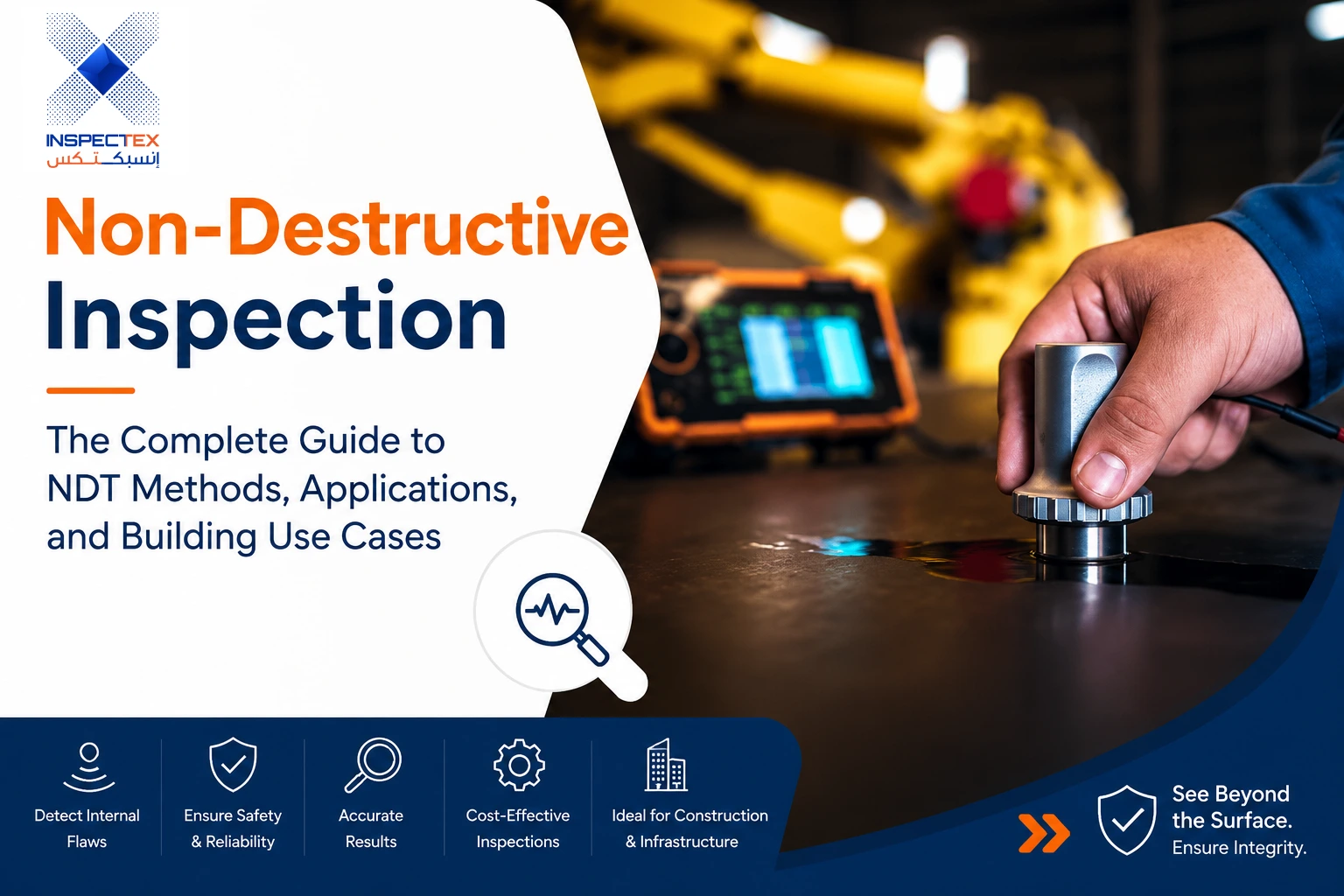
Imagine possessing the ability to look through solid concrete walls, peer under luxurious marble floors, or scan the internal wiring of a massive commercial facility without ever lifting a hammer. In the medical field, doctors use ultrasound and MRI scans to evaluate the human body without surgery. The modern engineering and construction sector utilizes an identical philosophy for buildings. Acquiring or managing high-value real estate requires a profound understanding of the asset’s structural health, yet destroying expensive finishes to find hidden faults is highly counterproductive.
This is precisely where advanced technological diagnostics come into play, preserving the aesthetic value of the property while uncovering critical underlying data. To help property owners and investors make calculated, secure decisions, Inspectex has developed this comprehensive guide to explain how these futuristic technologies work, why they are essential, and how they protect your real estate investments.
What Is Non-Destructive Inspection?
Evaluating the genuine condition of a property requires extracting precise engineering data without compromising the physical integrity of the building’s envelope.
This specialized technical process refers to a wide array of analysis techniques used in the science and technology industry to evaluate the properties of a material, component, or system without causing damage. In the context of real estate, a non-destructive inspection allows engineering experts to scan foundations, analyze electromechanical networks, and detect moisture intrusions, leaving the physical structure completely untouched. By relying on physics, such as thermal variances and electromagnetic waves, engineers can accurately diagnose hidden flaws and prevent catastrophic failures.
Understanding Destructive and Non-Destructive Approaches in Property and Construction
In the engineering world, assessing material strength often involves two primary paths. The first is the destructive route, which requires extracting core samples from concrete pillars or breaking through walls to analyze the internal reinforcement. While highly accurate in laboratory settings, this method permanently damages the finished property. In contrast, NDT methodologies provide a non-invasive, ultimate solution for finished properties. This approach delivers immediate, on-site data across the entire structure, allowing for a comprehensive evaluation of a luxury villa or a corporate tower without inflicting any costly cosmetic or structural damage.
Why Advanced Diagnostic Testing Is the Gold Standard for Building Assessment
The modern real estate market moves rapidly, and relying on basic visual walk-throughs is an obsolete practice that exposes buyers to massive financial risks.
Implementing NDT is the ultimate gold standard because it shifts asset management from a reactive phase to a proactive strategy. Hidden moisture seeping behind drywall or thermal arcing within a main electrical panel cannot be seen with the naked eye until they cause a massive failure. Advanced diagnostics pinpoint these exact anomalies in their infancy. This early detection mechanism saves investors millions of riyals in emergency repair costs, provides unarguable technical leverage during purchase negotiations, and ensures the building remains a safe, habitable environment for its occupants.
The 5 Core Methods Used in Building and Structural Evaluation
To truly understand the value of these assessments, one must look at the specific scientific tools placed in the hands of specialized engineers.
Visual Testing and Ultrasonic Testing
The primary phase always begins with advanced visual techniques. Engineers deploy AI-powered drones and flexible borescopes equipped with high-resolution cameras to navigate deep within HVAC ducts and plumbing pipelines to spot blockages or corrosion. Following this, Ultrasonic Testing is utilized. This method transmits high-frequency sound waves directly into structural materials. If the sound wave hits a hidden internal void, crack, or severe material flaw, it reflects back to the device, generating precise data about the depth and severity of the hidden defect.
Ground Penetrating Radar, Acoustic Emission, and Thermal Imaging
For deeper structural insights, the Ground Penetrating Radar (GPR) is indispensable. It sends electromagnetic pulses through concrete slabs to map out the exact location of embedded rebar, post-tension cables, and concealed plumbing lines. Additionally, Acoustic Emission listens for the microscopic sounds of active cracking within stressed concrete. Finally, Thermal Imaging cameras detect minute temperature variations across surfaces, instantly revealing cold moisture leaks behind bathroom tiles or dangerously hot electrical circuits within sealed distribution boards.
Real-World Examples of Non-Destructive Inspection in Buildings
Theoretical science translates into massive financial savings when applied correctly during real estate acquisitions and facility management.
Detecting Concealed Defects Without Demolition or Disruption
Consider a newly built luxury asset. To the untrained eye, the large-format porcelain flooring looks flawless. However, a specialized engineer utilizing advanced acoustic tapping and scanning devices might discover extensive hollow voids beneath the tiles, indicating a severe lack of adhesive coverage. Identifying this through a non-destructive inspection allows the buyer to force the contractor to rectify the flooring before the final handover, preventing the tiles from cracking under heavy furniture loads a few months later.
GPR and Thermal Imaging in Action: Moisture, Voids, and Rebar Mapping
Water intrusion is the silent destroyer of modern buildings. Instead of randomly breaking walls to find a suspected plumbing leak, thermal cameras map the exact trajectory of the moisture hidden behind the gypsum boards. Similarly, before a facility manager decides to drill into a commercial concrete slab to install heavy machinery, deploying a GPR scan reveals the exact layout of the structural rebar, ensuring the drilling process does not sever critical support cables and compromise the building’s stability.
When Do Destructive and Non-Destructive Methods Apply in Construction?
The construction lifecycle dictates which engineering methodology provides the most value.
During the initial building phases, extracting concrete cylinders for laboratory crushing is a standard destructive procedure to verify the strength of the cement mix. However, once the property reaches the finishing stages or is fully operational, the dynamic changes entirely. At this stage, comparing destructive and non-destructive applications makes it clear that tearing down a newly painted wall to check a pipe is illogical. Modern NDT testing integrates seamlessly into the final handover phases, allowing owners to verify the quality of the concealed MEP (Mechanical, Electrical, and Plumbing) installations without ruining the aesthetic appeal of their new investment.
Standards and Certifications That Govern Inspection Quality
High-tech equipment requires highly trained human intellect to interpret the complex data accurately.
The evolution of NDT non-destructive testing has changed the landscape of building diagnostics, but it heavily relies on strict regulatory frameworks. International bodies such as the American Society for Nondestructive Testing (ASNT) and the International Organization for Standardization (ISO) dictate rigid operational protocols.
What Certification Should Your Technical Inspector Hold?
A professional evaluator must possess documented academic qualifications, extensive field experience, and strict accreditation from the Saudi Council of Engineers (SCE). Utilizing NDT non-destructive testing ensures that the officially licensed engineer can differentiate between a critical structural flaw and a benign material variation. This verified level of expertise guarantees that the final reports are objectively accurate, legally sound, and immune to technical disputes during real estate negotiations.
Inspectex Diagnostic Services Across Riyadh and Jeddah
Securing a high-value property requires an uncompromising institutional approach that eliminates human error and guarantees absolute technical certainty.
GPR, Ultrasonic Testing, and 3D Laser Scanning in Every Assignment
Visual assessments are inherently limited when dealing with complex modern infrastructure. To guarantee absolute precision, Inspectex engineering teams across Riyadh and Jeddah integrate advanced NDT technology directly into their site routines. Rather than making assumptions about a concrete slab, our experts deploy Ground Penetrating Radar (GPR) to map embedded reinforcements and detect concealed moisture pockets.
When analyzing the hidden strength of critical load-bearing columns, Ultrasonic Testing is used to deliver immediate material density metrics. Additionally, 3D Laser Scanning captures exact spatial dimensions, revealing minute structural misalignments that the human eye cannot catch. By placing these sophisticated tools in the hands of specialized engineers, we ensure that every commercial property inspection or luxury villa home inspection is driven by irrefutable, scientific data rather than mere observation.
Actionable Intelligence: Transforming NDT Data into Certified Engineering Reports
The true power of non-destructive testing lies in how the raw field data is analyzed and utilized. Once the on-site scanning concludes, our dedicated engineering analysts process the complex ultrasonic and GPR metrics behind the scenes. Over a streamlined period of 3 to 7 working days, these findings are synthesized into a strategic, SBC-compliant inspection report.
This document transcends a basic defect list; it translates invisible anomalies into clear financial and technical insights, complete with an accurate repair Bill of Quantities (BOQ) based on live market costs. Empowered by Inspectex’s official SASO and SAAC accreditations, this certified deliverable grants you undeniable leverage in property negotiations. Furthermore, to support your ongoing risk assessment and facility management strategies, we safeguard your complete diagnostic history in our encrypted archives for a full decade.
Frequently Asked Questions About Non-Destructive Inspection
What Is Non-Destructive Inspection?
It is a highly specialized engineering assessment technique that evaluates the safety, integrity, and operational efficiency of a building’s materials and hidden systems without causing any physical damage to the property.
What Are the 5 Methods of NDT?
The five core techniques commonly utilized include Visual Testing (using borescopes), Ultrasonic Testing, Ground Penetrating Radar (GPR), Thermal Imaging, and Acoustic Emission Testing.
What Is an Example of a Non-Destructive Inspection?
A prime example is an engineer using an infrared thermal imaging camera to detect an active, hidden water leak behind a fully tiled bathroom wall without having to remove a single piece of ceramic.
What Are the 4 Types of NDT?
In engineering standards, NDT is primarily categorized into Surface Examination (like Visual and Magnetic Particle), Volumetric Examination (like Ultrasonics and GPR), Condition Monitoring (like Acoustic Emission), and Thermography (Thermal evaluation).
Need a Certified Diagnostic Assessment in Riyadh or Jeddah? Inspectex Delivers
The modern real estate landscape demands a sophisticated approach to asset management. Purchasing or leasing a property based on visual appeal alone exposes your capital to severe hidden liabilities. You need undeniable engineering facts to validate the true operational condition of the building’s infrastructure. Do not leave your financial security to chance or superficial evaluations. Partner with the specialized engineering team at Inspectex today to secure a meticulously detailed, legally backed technical evaluation. Ensure your next real estate transaction is protected by the highest standards of engineering certainty.

Leave a Reply