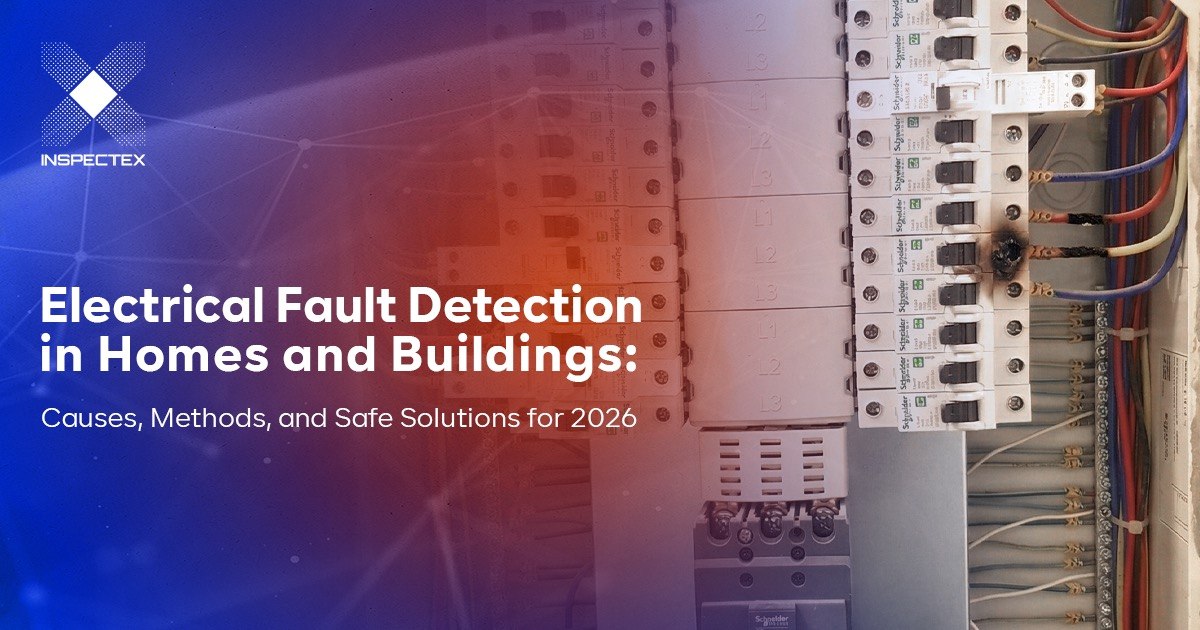
The safety of any residential electrical system relies on a fundamental engineering principle: the total insulation of wiring. When this insulation fails at any point, an electrical short circuit or fault occurs. This is not merely an inconvenience; it represents a structural failure within the circuit that can lead to catastrophic consequences. At Inspectex, we apply rigorous engineering standards to identify these hazards before they escalate, ensuring every property complies with the Saudi Building Code (SBC). Understanding the root causes of these failures and recognizing early warning signs is the primary step in ensuring property safety. This guide systematically outlines how Inspectex identifies and remediates these critical electrical issues through professional electrical fault detection.
What Is Electrical Detection?
To maintain a safe environment, it is essential to define electrical faults through a technical lens rather than a commercial one.
Defining an Electrical Fault and How It Occurs
Technically, an electrical fault is an unintended connection that occurs between two wires or between a wire and a conductive body, such as a metal frame or pipe. In standard operation, current flows through a closed, insulated path. A fault occurs when the current finds an unintended path, leading to a sudden surge that exceeds the circuit’s capacity. Depending on the fault type, this can generate intense heat within milliseconds (as in a short circuit) or accumulate gradually over minutes or hours (as in an arc fault), both of which can ignite nearby flammable materials.
Short Circuit vs. Insulation Arc Fault: A Technical Distinction
While both present severe risks, their technical mechanisms differ:
- Short Circuit: The most violent form of electrical failure. It occurs when a hot wire directly touches a neutral or ground wire, resulting in very low resistance. This triggers the circuit breaker immediately and is often accompanied by sparks and audible popping.
- Insulation Arc Fault (Insulation Degradation): A more subtle and dangerous failure. It occurs when insulation deteriorates, allowing current to leak or arc slowly toward a conductor. This may not draw enough current to trip a standard breaker but generates sustained heat that chars surrounding materials, posing a high long-term fire risk.
Causes of Electrical Faults
Identifying the source of a fault is the first step toward a permanent engineering solution for electrical hazards.
Damaged Wiring or Deteriorated Internal Insulation
This is prevalent in older structures where plastic insulation hardens and cracks due to thermal stress or environmental heat. Furthermore, rodents may compromise wire integrity, a damage pattern that commonly manifests as an Arc Fault rather than an immediate short circuit, making it particularly difficult to detect without professional inspection. Accidental physical damage, such as drilling into a wall, can also cause immediate or latent faults.
Overloaded Electrical Circuits
Each circuit is engineered for a specific amperage. Connecting multiple high-consumption appliances (such as AC units, water heaters, and irons) to a single circuit forces it to draw current beyond its capacity. This overload causes dangerous temperature spikes that melt insulation, eventually leading to a short circuit.
Unsafe Appliances or Non-Compliant Electrical Fittings
Relying on counterfeit chargers or low-quality power strips is a direct safety hazard. These products often utilize thin-gauge wiring and cheap insulation that cannot withstand normal operational loads. Furthermore, corroded plugs or broken sockets in aging appliances represent significant technical weak points.
Warning Signs of Electrical Faults
Recognizing these indicators allows for proactive intervention and Electrical Hazard Detection before a structural failure occurs.
Repeated Circuit Breaker Trips
The circuit breaker is a critical safety component designed to disconnect power upon sensing an overload or short. If a specific breaker trips repeatedly, it is a clear diagnostic signal of a fault within that circuit requiring an immediate professional assessment by a specialized electrical engineer to identify the root cause.
Burning Smell from Switches, Sockets, or the Distribution Panel
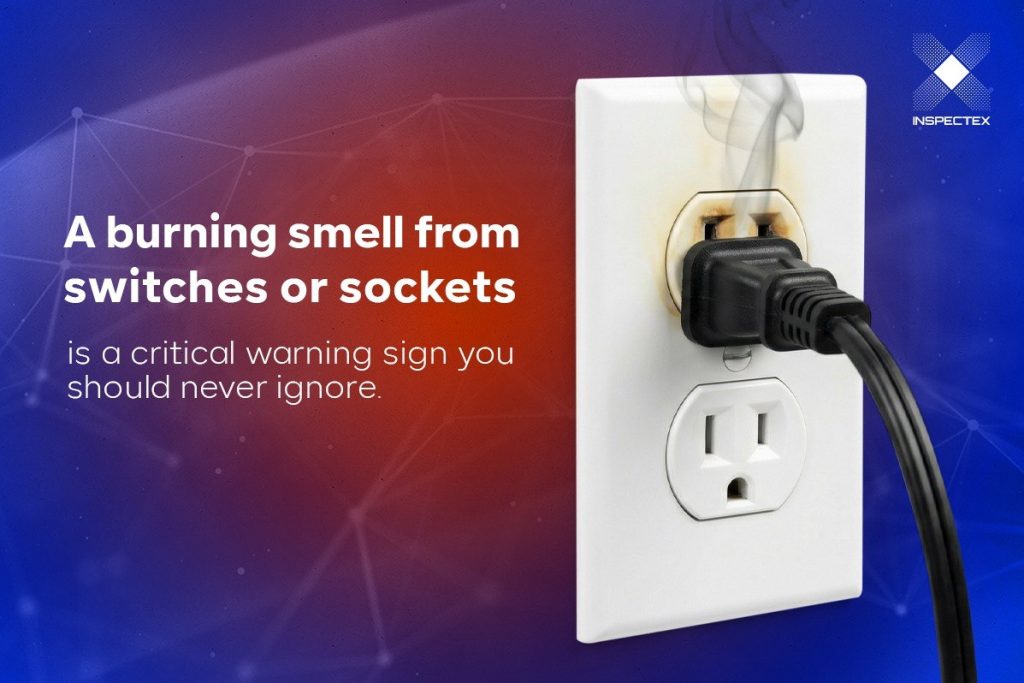
The scent of burning plastic or a fishy odor near an outlet or distribution panel indicates that a component is overheating and insulation is actively charring. In such instances, the main breaker must be disconnected immediately.
Hot Sockets, Visible Sparks, or Buzzing Sounds
While some warmth is normal, an outlet that is hot to the touch indicates high resistance and poor connection. Visible sparking when plugging in devices or audible buzzing sounds are definitive signs of unstable connections that can escalate into a full short circuit.
Why Early Electrical Detection Matters
Proactive electrical inspections transform high-risk variables into manageable data points.
Preventing Fires and Structural Property Damage
Electrical failures are a leading cause of residential fires. A small short circuit behind a wall can smolder for hours before detection. Early identification acts as a shield against catastrophic property loss.
Protecting High-Value Electronic Equipment
Modern electronics contain sensitive digital circuits. Short circuits or voltage fluctuations can cause instantaneous, permanent damage to smart TVs, computers, and specialized kitchen appliances.
Ensuring the Safety of Building Occupants
Beyond fire risks, electrical faults increase the danger of lethal electric shocks. A specific condition known as Earth Leakage, where fault current travels through metal appliance frames or plumbing fixtures to ground, can turn a home into a hazardous environment, particularly for vulnerable occupants. This condition requires an RCD (Residual Current Device) for effective protection, as standard circuit breakers cannot detect it.
Electrical Detection Methods
Professional firms utilize systematic protocols to locate faults without unnecessary demolition.
Using Modern Electrical Detection Devices
Specialized engineers utilize advanced diagnostic technologies to map wiring paths within walls and identify the exact point of failure with high precision.
Manual Inspection of Wiring, Switches, and Sockets
A specialized electrical engineer at Inspectex performs a meticulous visual survey of the distribution panel, checking for loose connections, charred wiring, or signs of thermal degradation in sockets and switches.
Root Cause Analytical Methodology
Unlike standard repairs, an engineering audit focuses on why the fault occurred. Our electrical engineer analyzes the load distribution, the quality of the grounding system, and the age of the insulation materials. This analytical approach ensures that the final remediation plan is fully compliant with the Saudi Building Code (SBC), providing a level of structural safety and technical accuracy that prevents the recurrence of the fault.
Types of Electrical Fault Detection Devices
Top-tier firms deploy a suite of non-destructive testing (NDT) technologies.
Digital Sensor-Based Devices
These include high-precision multimeters for measuring voltage and resistance, clamp meters for measuring live circuit current without disconnecting wires, and insulation resistance testers (megohmmeters) that apply a high DC voltage to verify the integrity of the insulating material.
Voltage Detection Tools
Portable tools are utilized as an initial safety step to verify if a circuit is live before the detailed diagnostic process begins.
Professional Inspection Tools for Residential Units
For complex cases, advanced thermal diagnostics and electric heat detection methodologies are utilized. Thermal cameras capture temperature distributions within walls, revealing hot spots that indicate short circuits or poor connections without the need for wall removal. For arc fault detection specifically, Arc Fault Circuit Interrupter (AFCI) testers are deployed to verify whether existing AFCI breakers are functioning correctly and to simulate arc conditions for diagnostic purposes.
How to Fix an Electrical Fault
Remediation must follow a systematic engineering approach.
Pinpointing the Fault Location Before Any Repair Begins
Effective repair begins with an accurate diagnosis. Pinpointing the exact failure point prevents the unnecessary replacement of healthy circuit components.
Isolating or Replacing Damaged Wiring
Once the compromised section is identified, power is disconnected, and the damaged segment is removed. It is replaced with wiring of equal or superior technical specifications, with all new connections being professionally insulated.
Safely Redistributing Electrical Loads
If the fault was caused by overloading, the solution requires a load assessment. This may involve moving appliances to different circuits or installing a new, independent circuit for high-consumption devices.
Preventing Electrical Faults: Practical Tips
Proactive maintenance is the best defense against electrical hazards.
Scheduled Maintenance of Electrical Circuits
Request a comprehensive pre-purchase electrical inspection and schedule periodic audits of your distribution panel based on the building’s age and usage intensity. Older or heavily loaded properties warrant more frequent assessments to ensure all connections remain secure and free from thermal stress.
Avoiding Overloaded or Daisy-Chained Extensions
Do not utilize multi-outlet power strips for high-consumption appliances. Avoid daisy-chaining one extension into another. If additional outlets are required, they must be installed by a specialized professional.
Installing Proper Protection Devices: GFCI, RCD, and AFCI Breakers
Ensure the property is equipped with modern circuit breakers, Ground Fault Circuit Interrupters (GFCI) in kitchens and bathrooms for protection against earth leakage, and Arc Fault Circuit Interrupters (AFCI) in bedrooms and living areas to detect the slow arc faults that standard breakers cannot catch.
FAQs: Electrical Detection
What Is an Electrical Detector?
In a professional context, it refers to advanced diagnostic equipment used by engineers to trace circuits and detect thermal anomalies or insulation failures.
How Do You Use an Electrical Detector?
Professional tools are operated by trained engineers to measure resistance, voltage, and heat signatures within the walls to identify hidden faults.
What Tools Are Used for Electrical Detection?
Engineers utilize high-precision multimeters, clamp meters, insulation resistance testers (megohmmeters), AFCI testers, and thermal cameras to definitively diagnose the state of an electrical system.
Can a Fault Be Detected Without Opening Walls?
Yes, in the vast majority of cases, modern non-destructive technologies allow engineers to pinpoint the exact location of an internal fault without any demolition.
When Should I Call an Inspection Company for Electrical Detection?
You must contact a specialized inspection company immediately upon noticing repeated breaker trips, burning smells, or overheating outlets. Delaying an engineering assessment can turn a minor fault into a severe structural or fire hazard.
Do Electrical Detection Methods Differ Between Homes and Commercial Buildings?
The principles are the same, but commercial facilities often utilize complex 3-Phase systems and higher loads, requiring more advanced diagnostic technologies and specialized industrial experience.
Book an Electrical Fault Inspection Service with Inspectex
A proactive approach focused on prevention is essential for the longevity of your property. Warning signs are diagnostic data sent by your electrical system; ignoring them can be costly and dangerous.
Contact Inspectex for expert electrical detection and comprehensive inspection services available in both Riyadh and Jeddah. Schedule your targeted assessment today with our specialized electrical engineers to ensure your property remains safe and compliant with the Saudi Building Code (SBC).

Leave a Reply