A perfectly painted wall can hide an unusual temperature pattern. An electrical panel may contain an unusually hot connection. Neither clue tells the whole story. The value of thermal imaging inspection comes from understanding what the image shows, what affects it, and which questions still need answers. This guide explains how heat patterns can help owners understand buildings without treating every bright color as a fault.
Inspectex shares this knowledge to encourage clearer, evidence-based property decisions.
How Thermal Images Work: Emissivity, Delta T, and Context
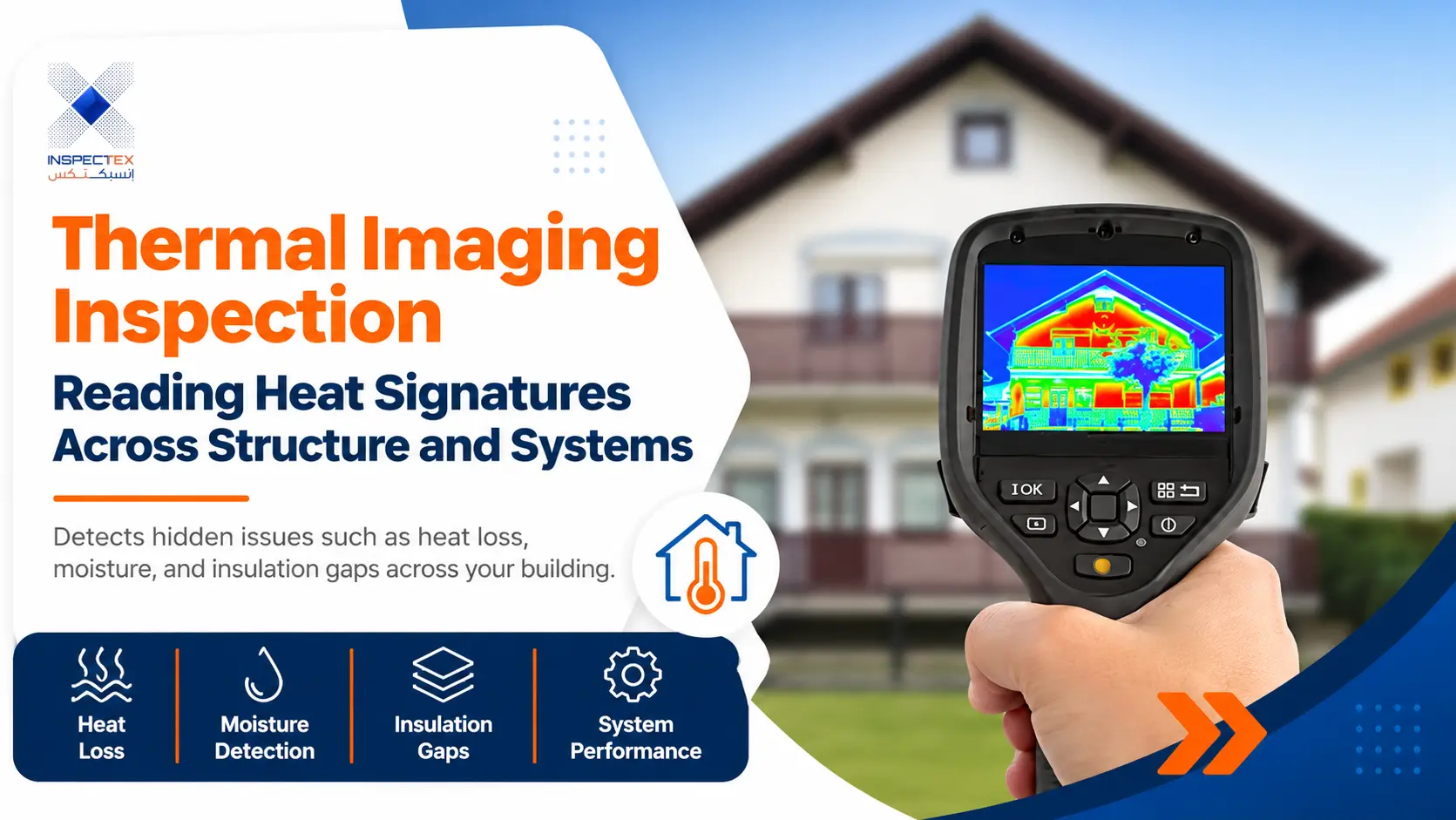
A thermal camera measures infrared radiation from surfaces and converts it into an image of apparent temperature. Colors represent temperature ranges, not direct pictures of damage.
Emissivity describes how well a surface emits radiation. Shiny metal may reflect nearby heat, while painted surfaces behave differently. Materials, reflections, distance, and viewing angle affect readings.
Delta T means temperature difference. Comparing similar surfaces or components is often more informative than judging a single temperature. A warm connection can be normal under load, and a cold wall patch can have several explanations.
There is no universal temperature threshold proving a building fault. Reliable conclusions depend on the system, operating conditions, and supporting evidence.
Building Thermographic Surveys: Where Patterns Matter
A thermographic survey commissioned by building owners may reveal insulation gaps, moisture-related differences, and unexpected air movement. The scope should match the property and the question being investigated.
Insulation Continuity, Thermal Bridges, and Air Leakage
Missing or poorly fitted insulation may create uneven wall or ceiling temperatures. Thermal bridges, where heat moves more easily through framing or connections, can produce repeating patterns.
Sunlight, shadows, and construction materials can cause similar differences. Air leakage also depends on pressure and wind, so other checks may be necessary.
A property condition assessment places these observations alongside the broader building condition. An image cannot calculate insulation performance.
Moisture Ingress and Concealed Water Damage
Damp materials may heat and cool differently from dry ones. Evaporation can also cool a surface, creating an unusual image before stains appear.
However, thermal imaging inspection does not directly measure moisture or see through walls. A cold patch might result from air conditioning or missing insulation.
Water leak detection therefore needs supporting evidence, such as independent moisture checks and plumbing assessment. A thermal pattern can guide the investigation without proving where water entered.
Flat Roofs and Facade Assessment
Wet roof insulation may retain heat differently. ASTM C1153-23 addresses nighttime infrared surveys for particular roof constructions.
Results depend on the roof layers, weather, and safe access. The image does not establish the leak’s entry point. Facades require equal caution: sunlight, reflections, and mixed materials can imitate defects.
Thermal Surveys of Operating Electrical Systems
Electrical thermography helps identify unusual heating patterns in accessible equipment under representative loads. Interpretation must account for normal differences between components.
Possible Loose Connections, Uneven Loads, and Overloads
A deteriorated connection may become unusually hot because resistance increases. Overloading and uneven phase loads can also affect temperature.
During thermal imaging inspection, a hot spot should be compared with similar components and actual current conditions. Lightly loaded circuits may hide problems; heavily loaded circuits naturally produce more heat.
Electrical problems in the house include risks that infrared images cannot establish, including earthing faults and insulation damage. Separate electrical testing remains essential.
Switchgear, Distribution Boards, and Backup Power
Distribution boards and standby systems may show useful thermal differences when operating normally. Equipment that is switched off often provides limited evidence.
Live electrical equipment can be dangerous. Only appropriately qualified electrical personnel should manage access and follow safe procedures. A standard infrared image cannot reveal every component behind an opaque protective cover. Inaccessible areas must be recorded.
Mechanical Thermography for HVAC and Rotating Equipment
Motors, bearings, pumps, and cooling equipment generate heat in normal operation. Unusual differences may indicate friction, restricted flow, insulation problems, or changing operating conditions.
Comparisons work best between similar components or repeated observations under comparable loads. Speed, ventilation, ambient temperature, and equipment duty all matter.
Thermal imaging inspection can help prioritize further mechanical evaluation, but it cannot confirm bearing wear, refrigerant condition, or efficiency from an image alone. Other measurements are needed before repairs or replacements are recommended.
Survey Conditions That Shape Reliable Results
The same surface may look different throughout the day. Thermal imaging inspection records should note weather, temperature differences, equipment loads, and access limits.
Load, Temperature Difference, and Weather
Building surveys generally benefit from a sustained indoor-outdoor temperature difference. No single figure works for every construction type.
Sunlight, wind, rain, and recent heating or cooling can distort patterns. Some roof surveys require suitable nighttime conditions. A thermographic survey commissioned by building managers should explain the chosen timing.
Electrical and mechanical equipment should operate under meaningful loads, with those conditions documented.
Internal Versus External Scanning
Interior images can reveal patterns near ceiling joints and wall edges. Exterior views may show wider facade differences but are more exposed to solar heating and reflections.
An infrared building inspection may need both viewpoints, depending on safe access and construction. Consistent temperature scales help prevent misleading image comparisons.
Professional Thermography Versus a Phone Attachment
A phone-connected thermal accessory can produce an interesting image. Reliable interpretation requires suitable methods, relevant experience, and clear records.
Qualifications and Reporting Standards
ISO 6781-1:2023 describes building thermography procedures. ISO 6781-3:2015, confirmed current in 2026, addresses qualifications for operators, analysts, and report writers. ISO 18436-7:2014 covers personnel qualification for machinery thermography.
Training should match the application. Experience with building envelopes does not automatically establish competence in energized electrical systems.
Why One Thermal Image Cannot Prove a Fault
A cold ceiling patch might indicate moisture, air movement, missing insulation, or a nearby cooling outlet. Likewise, a hot electrical connection requires load information and further checks.
A credible report separates what was observed from what is suspected and what has been confirmed. It also identifies inaccessible surfaces and uncertainty rather than promising that every hidden problem was detected.
What a Useful Report Should Tell the Owner
Images become valuable when they support decisions. A good report identifies the inspected area, operating conditions, evidence, limitations, and recommended next steps.
Severity, Repair Priority, and Cost Exposure
Findings should include locations, ordinary photographs where useful, thermal images, and relevant measurements. Priority should reflect verified risk, not dramatic colors.
A suspected electrical hazard may require urgent qualified attention, while a possible insulation gap could enter planned maintenance. An inspection report should distinguish immediate concerns from further testing and routine monitoring. Reliable repair budgets need a defined scope.
Baseline Images for Future Monitoring
Dated images with recorded load, viewing position, and temperature settings provide a useful baseline. Future reviews can identify comparable changes.
Different color scales can make unchanged equipment look different. Records must therefore preserve the context, not just the picture.
Frequently Asked Questions About Thermal Imaging
What Is a Thermal Imaging Survey?
It is a systematic review of surface temperature patterns. It highlights unusual areas that may require further investigation.
What Can an Infrared Building Inspection Detect?
It may reveal suspected insulation gaps, thermal bridges, air leakage patterns, and moisture-related differences. Confirmation often requires other methods.
What Conditions Are Required for a Thermographic Survey?
Suitable temperature differences, stable conditions, safe access, and appropriate operating loads where relevant. Weather and recent sun exposure can change results.
How Often Should Electrical Thermography Be Carried Out?
There is no universal interval. Frequency depends on risk, equipment importance, maintenance history, operating conditions, and applicable requirements.
Conclusion: Better Questions Lead to Better Decisions
A heat pattern is most valuable when it prompts the right investigation. Understanding thermal imaging inspection helps owners avoid rushed conclusions, focus resources, and request clear evidence before accepting repairs.
Through educational content, Inspectex aims to make these decisions more informed and responsible.