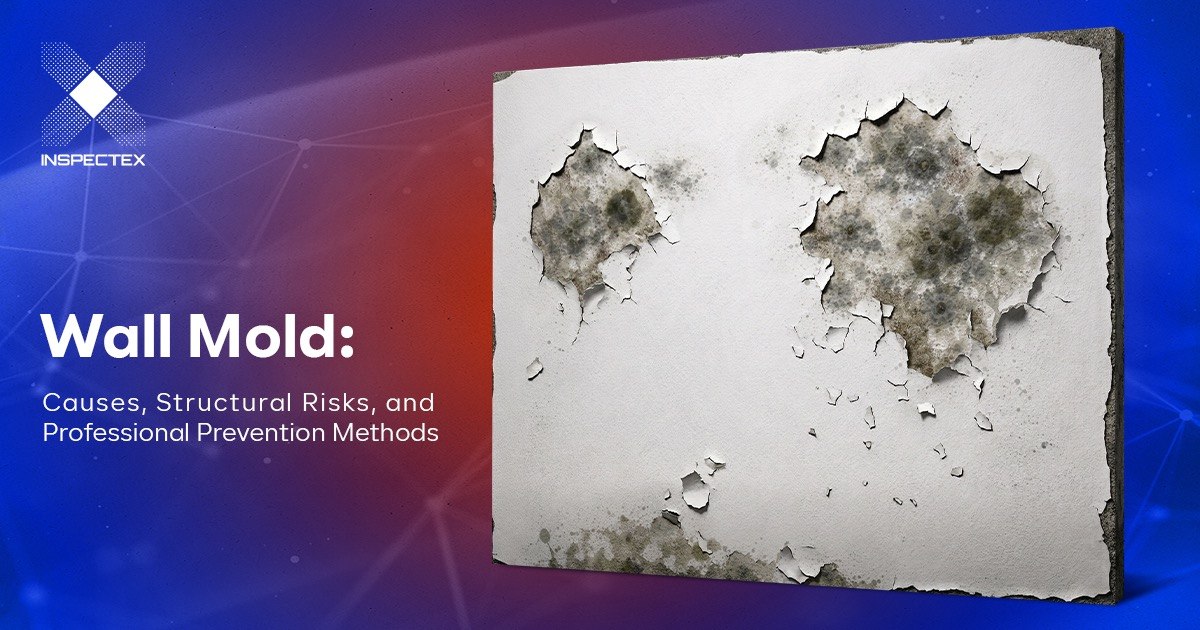
Buildings and modern facilities face continuous environmental and technical challenges that directly affect the quality of life indoors and the sustainability of the structural framework. Among these complex and severe defects, Wall Mold stands out as a critical indicator of underlying building failures. This biological growth represents a clear technical signal of a moisture imbalance or a failure in insulation and ventilation systems, transforming dry interior spaces into a fertile environment for microscopic fungi. Consequently, the appearance of these organisms necessitates immediate action to conduct a specialized real estate inspection, aiming to identify the root causes before a visual nuisance evolves into an irreversible structural and health hazard.
Inspectex adopts a scientific monitoring methodology based on the principle that periodic real estate inspection is the surest guarantee to protect the asset’s value from deterioration. This guide explores the professional standards for diagnosing Wall Mold, explaining how advanced technologies uncover the hidden relationship between concealed water leaks and fungal growth. This ensures the provision of a safe residential environment that fully complies with the highest engineering quality specifications.
What Is Wall Mold and Why Does It Appear in Buildings?
Wall Mold consists of microorganisms belonging to the fungi kingdom, which travel through the air seeking damp surfaces with organic matter to settle and grow. Once humidity levels exceed 60 percent in room corners or behind furniture, these fungi begin to form colonies that secrete powerful enzymes capable of breaking down paint and plaster layers. Consequently, the structural material of the wall becomes brittle and prone to crumbling, highlighting the urgent need for a precise real estate inspection to evaluate the penetration depth of these fungi into the concrete pores.
What Causes Mold on Walls? An Engineering Perspective
The causes of Wall Mold are diverse and overlapping, but the lack of technical oversight during the execution phase remains the most prominent factor in its subsequent appearance. From a technical angle, poor thermal insulation in exterior walls contributes to the condensation phenomenon, where warm indoor air meets cold wall surfaces, forming water droplets that provide the ideal environment for mold. Furthermore, the poor distribution of exhaust vents in kitchens and bathrooms acts as a barrier to air renewal, increasing the concentration of water vapor in enclosed spaces. Identifying the actual cause requires a penetrating technical vision documented through field inspection.
How Water Leaks and Moisture Drive Mold Growth Inside Walls
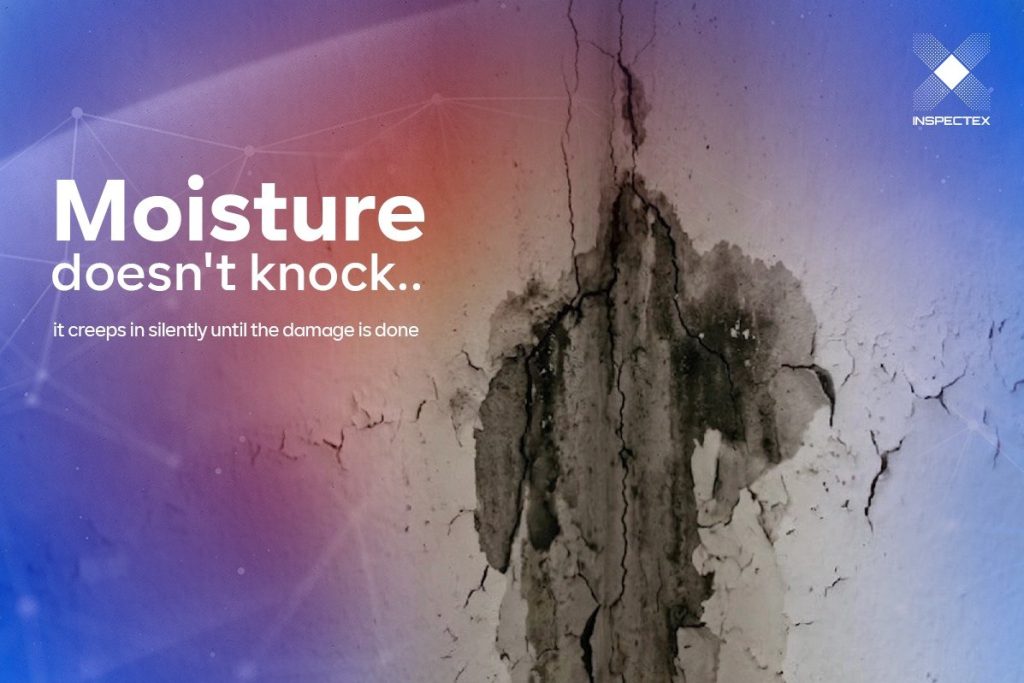
Water leaks are the driving fuel for the spread of Wall Mold in all its forms, especially in areas where plumbing networks intersect with structural elements. The moment a microscopic hole occurs in supply or drainage pipes, water begins creeping through the plaster and paints, creating a permanent moisture state that cannot dry out through traditional means. Moisture resulting from leaking roofs or underground tanks is the most damaging to the building, often leading to the emergence of dense Black Mold On Walls that threatens occupant safety. This highlights the importance of the technical link between solving mechanical problems and treating the walls.
Structural and Health Damage Caused by Wall Mold
The damage extends far beyond cosmetic distortion, directly impacting the operational efficiency of the building.
How Wall Mold Compromises Structural Integrity Over Time
From a precise engineering standpoint, the moisture causing the mold leads to the disintegration of salts in the plaster and weakens its cohesion, while the fungi break down the organic materials in paints and putties. This combined action results in the severe dilapidation of the wall. In advanced cases, the saturation of walls with moisture associated with Fungus On Walls allows water to reach the reinforcing steel inside columns and ceilings, causing rust and threatening the stability of the entire building.
Impact on Property Value and Investment Returns
Regarding the impact on market value, the foul odors and unhealthy appearance reduce the facility’s attractiveness to investors, resulting in direct financial losses. Investing in a professional inspection gives you a clear vision to protect your assets from these depreciating factors.
How to Tell If Your Property Has Wall Mold
Mold begins its journey in dark corners and beneath wallpaper, making it a silent threat that requires careful monitoring of sensory and technical indicators. Once any change in the smell of the space is detected, experts must be consulted immediately to conduct the necessary audit.
Visible Signs: Stains, Discoloration, and Peeling Paint
The appearance of fine black or gray spots on window edges or ceiling corners is the first warning of Wall Mold. Additionally, the separation of paint from the plaster or the appearance of bubble-like bulges provides evidence of high moisture pressure behind the exterior shell. These signs necessitate a real estate inspection using thermal imaging cameras that detect the moisture pockets causing these phenomena with absolute precision and without demolition.
Why Early Mold Inspection Prevents Escalating Damage
Early inspection stops the fungal life cycle before spores transfer to central air conditioning systems and spread throughout the entire facility. Due to this preventative commitment, the owner can treat the causes before luxury finishes or wooden furniture are damaged. The inspection acts as a decisive tool that prevents simple observations from turning into massive structural defects.
Wall Mold Inspection with Inspectex
Inspectex adopts an engineering protocol that connects visible symptoms with hidden causes, believing that successful inspection begins with understanding the root of the problem. We provide these highly specialized services exclusively in Riyadh and Jeddah.
Inspectex’s Specialized Inspection Methodology
Our targeted inspection for wall mold is distinguished by the precise assessment conducted by our specialized expert:
Mechanical Engineer role: Focuses on inspecting condensation points in AC ducts and testing pipe pressure to ensure no water leakage feeds the mold colonies.
This specialized engineering focus guarantees that the treatment of Mould Inside Walls will be fundamental and permanent.
Thermal Imaging, Moisture Meters, and the Technical Report
Your specialized inspection concludes with the delivery of a detailed technical report in PDF format within 3 to 7 days. This report undergoes a rigorous multi-stage internal review process before being given final approval by a senior technical director. It includes precise thermal images and clear engineering recommendations for repair that fully comply with the Saudi Building Code. Furthermore, the report provides an actual bill of quantities (BOQ) with an estimated repair cost based on current market rates. All our inspection records are securely archived for at least 10 years.
Health Risks of Wall Mold
Experts classify the fungi released by Wall Mold as dangerous airborne pollutants that affect the quality of the respiratory environment inside the home. This threat makes real estate inspection a duty to protect family health before protecting building quality.
Allergies, Asthma, and Acute Respiratory Conditions
Inhaling air contaminated with mold particles irritates mucous membranes, causing chronic sneezing, sinus congestion, and shortness of breath. For highly vulnerable groups like children and the elderly, this can develop into acute asthma attacks requiring continuous medical care. The presence of mold in your home means a continuous source of immune triggers that requires immediate engineering intervention to correct the ventilation status.
Long-Term Health Effects: Mycotoxins and Neurological Impact
Medical research indicates that some mold strains secrete mycotoxins that may lead to nervous system issues, a continuous feeling of fatigue, and poor concentration. Living in an environment suffering from Fungus On Walls represents a drain on health and money. Confirming the safety of the property and its freedom from these pollutants before purchasing is a wise investment decision.
FAQs about Wall Mold
Is Mold in the Walls Harmful to Health and the Building?
Yes. It destroys the surface layers of the walls and weakens the plaster, in addition to releasing toxic mold spores that cause respiratory and skin diseases that can be chronic for sensitive groups. This requires a targeted real estate inspection immediately upon detection.
How Do You Permanently Get Rid of Mold on Walls?
The root cause, which is moisture, must first be treated, whether it results from water leaks or poor ventilation. After the area is completely dry, Removing Mold From Walls is done using specialized materials and repainting with anti-fungal materials to ensure it does not return.
How Can You Tell If There Is Hidden Mold Inside Your Walls?
By noticing pungent earthy odors or using digital moisture monitoring devices relied upon by specialized real estate inspections. These devices show moisture accumulations indicating Mould Inside Walls behind wallpaper or wooden decorations.
What Diseases Can Wall Mold Cause in Occupants?
This includes asthma, allergic pneumonitis, eye and skin irritation, and chronic sinusitis. Therefore, the Saudi Building Code emphasizes the necessity of providing sufficient ventilation and proper waterproofing to prevent these risks.
Book a Wall Mold Inspection with Inspectex
Obtaining a healthy residential environment free of engineering defects is a fundamental right for every owner and investor. Ignoring the signs of Black Mold On Walls opens the door to capital losses and irreparable health problems. At Inspectex, we put our extensive technical expertise at your fingertips to give you the technical certainty that protects your home and family.
Through a systematic real estate inspection, we guarantee an accurate diagnosis of all moisture causes, providing you with a comprehensive reference technical report that places the facts before you with complete transparency. The first step toward a safe home begins with ensuring the safety of your walls.
Contact Inspectex today to book your real estate inspection appointment.

Leave a Reply